5 lessons PRX vs LOUD at VALORANT Champions Shanghai taught us about playoff discipline
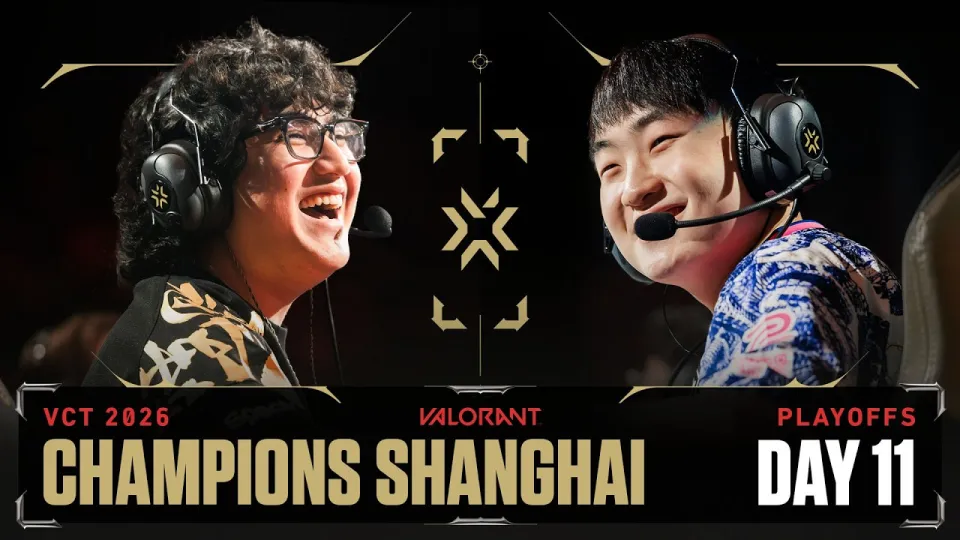
Video: PRX vs. LOUD — VALORANT Champions Shanghai — Playoffs Stage — Day 11
Want articles like this for your own video to promote it on YouTube and Google? Order them through the Telegram bot @sat_sit_bot. The bot writes and publishes the articles itself (with your YouTube video embedded) on popular topical websites (no ads). Free trial — 50 articles.
· based on the channel VALORANT Champions Tour
Key takeaways
- PRX vs LOUD took place during the playoffs stage of VALORANT Champions Shanghai, Day 11.
- PRX built massive leads on multiple maps but failed to close them out, according to fan analysis.
- LOUD's trade-heavy, fearless playstyle contrasted with PRX's reliance on individual 1v1 duels.
- Fans compared PRX's lack of discipline to NRG and 100T, who are seen as more consistent.
- The match fueled predictions of a LOUD vs 100T grand final at Champions.
PRX vs LOUD at VALORANT Champions Shanghai was more than a playoff match; it was a masterclass in the difference between raw skill and closing discipline. PRX repeatedly built massive leads but failed to convert them, while LOUD punished every overextension with coordinated trades. For fans and aspiring competitors, the series offers five concrete lessons about what separates a highlight-reel team from a trophy-winning one. Follow the official VALORANT Esports updates on X for bracket results and match schedules.
1. Closing out maps is a skill PRX still lacks
PRX's playoff run at Champions Shanghai followed a painful pattern: dominant early leads that evaporated under pressure. According to fan breakdowns, PRX threw both maps against LOUD despite having massive advantages, and earlier in the event they let a 9-3 lead slip against T1. The common thread is not aim or utility usage but decision-making in the mid-to-late round. When a team is up 9-3, the correct play is usually to slow down, take map control, and force the opponent to make the first mistake. PRX instead kept taking unnecessary 1v1 duels and relied on what fans call 'W-gaming' — running forward and trusting individual mechanics to bail them out. Against disciplined opponents, that approach turns a 9-3 lead into a 10-13 loss.
2. LOUD's trade structure makes them fearless
LOUD's advantage in this matchup was structural, not just mechanical. Fans noted that LOUD play a trade-heavy style: every duel is backed by a second player ready to refrag, which makes their entries feel fearless because the risk is shared. PRX, by contrast, often played like one player against two, three, or four opponents — isolated duels with no backup. In VALORANT, a 1v1 that becomes a 1v2 is usually a lost round, and LOUD exploited that repeatedly. The lesson for ranked and competitive players is simple: never take a fight your teammate cannot trade. LOUD's discipline in this area is why they are considered a genuine title contender at Champions.
3. The PRX classic is a warning about fundamentals
Fans have a name for PRX's recurring playoff collapses: 'the PRX classic.' It refers to the pattern of hyping the team up, watching them build a lead, and then watching them lose it through unnecessary aggression. The frustration is not that PRX lack talent — it's that they keep putting themselves in winnable situations only to throw them away. Commentators and fans alike have pointed out that if PRX had the same level of discipline as NRG or 100T, they could have won multiple trophies by now. The takeaway is that fundamentals — default setups, utility discipline, and patient mid-round calling — are what convert skill into championships. Flashy plays win rounds; fundamentals win series.
4. Fan expectations versus playoff reality
PRX's fanbase is one of the most passionate in the VCT, and that passion comes with a familiar resignation. Many supporters admit they are 'used to it' when leads slip away, and some joke that death, taxes, and PRX choking in the playoffs are the only certainties in life. That humor masks a real question: how much should fans invest emotionally in a team that consistently underperforms in high-pressure moments? The answer is that playoff VALORANT is a different game from group-stage VALORANT. The teams that win Champions are the ones that treat every lead as precious and every round as a set piece, not a highlight opportunity. PRX's talent is undeniable, but until they adopt that mindset, the 'PRX classic' will keep repeating.
5. What this means for the Champions bracket
The PRX vs LOUD result reshaped the playoff picture at Champions Shanghai. Fans immediately began predicting a grand final between LOUD and 100T, with some going as far as calling a 3-1 LOUD victory. Others pointed to NRG as a third powerhouse, joking that all three Americas teams are so strong that a round-robin between them might never end. The broader point is that the Americas region has depth: LOUD's trade discipline, 100T's consistency, and NRG's fundamentals give them distinct paths to the trophy. For PRX, the loss is a learning opportunity — but only if the team treats it as one. The gap between a playoff team and a world champion is rarely mechanical; it is the discipline to close.
Useful links
- VALORANT Esports on X — official updates and results
- VALORANT Esports on Facebook
- VALORANT Esports on Instagram
- VALORANT Esports on TikTok
- VALORANT on Twitch
Final takeaway
PRX vs LOUD at VALORANT Champions Shanghai was a case study in playoff discipline, and the lessons apply to every level of play. Closing leads, trading duels, and sticking to fundamentals are what separate contenders from champions. The match, presented by the VALORANT Champions Tour, will be remembered as another chapter in PRX's ongoing search for consistency — and as proof that LOUD's structured style is built for deep runs. For more official coverage and future match schedules, follow VALORANT Esports on X.
Source: PRX vs. LOUD — VALORANT Champions Shanghai — Playoffs Stage — Day 11 · Markdown version
Questions & answers
Why did PRX lose to LOUD at VALORANT Champions Shanghai?
PRX lost because they failed to close out massive leads, repeatedly taking unnecessary 1v1 duels instead of playing disciplined, trade-heavy VALORANT. LOUD punished those overextensions with coordinated refrags, turning PRX's early advantages into lost maps.
What is 'the PRX classic' in VALORANT esports?
It is a fan term for PRX's recurring playoff pattern: building a strong lead, then collapsing through over-aggression and individual plays. The phrase captures the frustration of seeing a talented team repeatedly throw winnable series.
How does LOUD's playstyle differ from PRX's?
LOUD rely on trade-heavy, structured play where every duel is backed by a teammate ready to refrag, making their entries fearless. PRX often isolate fights, playing 1v1s that turn into 1v2s or worse, which undermines their mechanical skill.
Which teams are favored to win VALORANT Champions after the PRX vs LOUD match?
Fans and analysts pointed to LOUD, 100T, and NRG as the strongest contenders, with many predicting a LOUD vs 100T grand final. LOUD's discipline and 100T's consistency made them the most cited favorites in the Americas region.